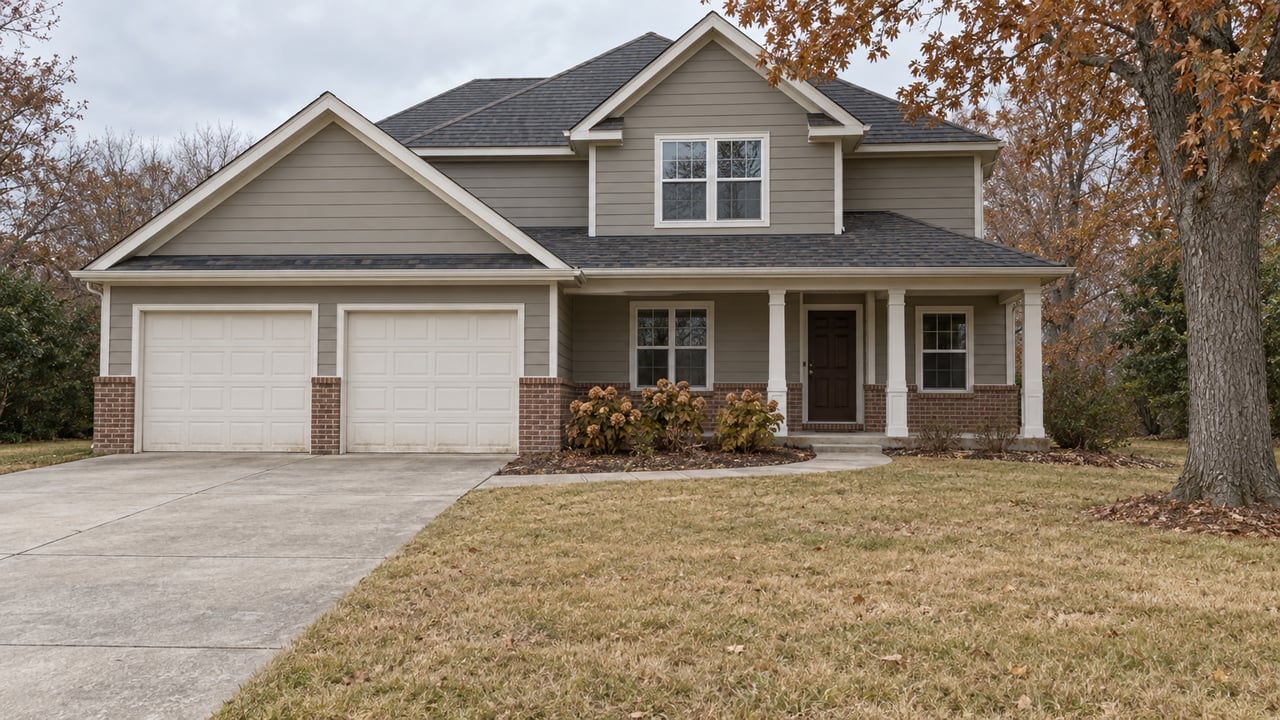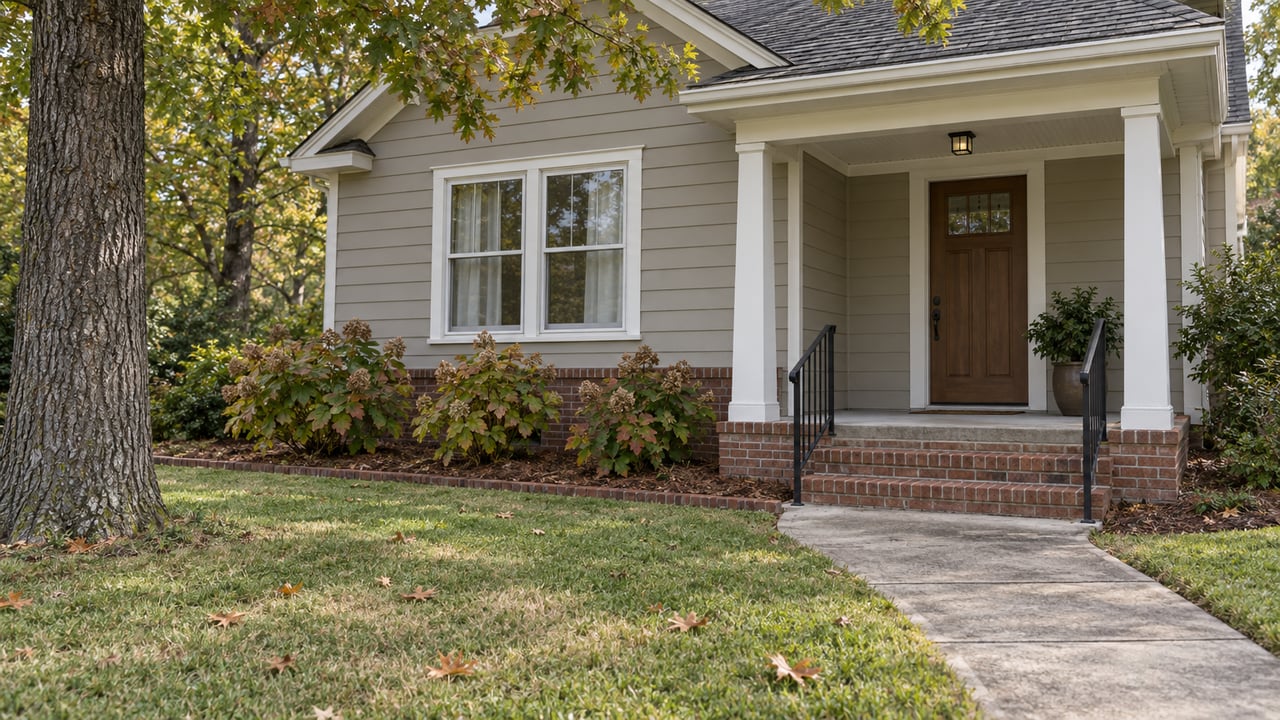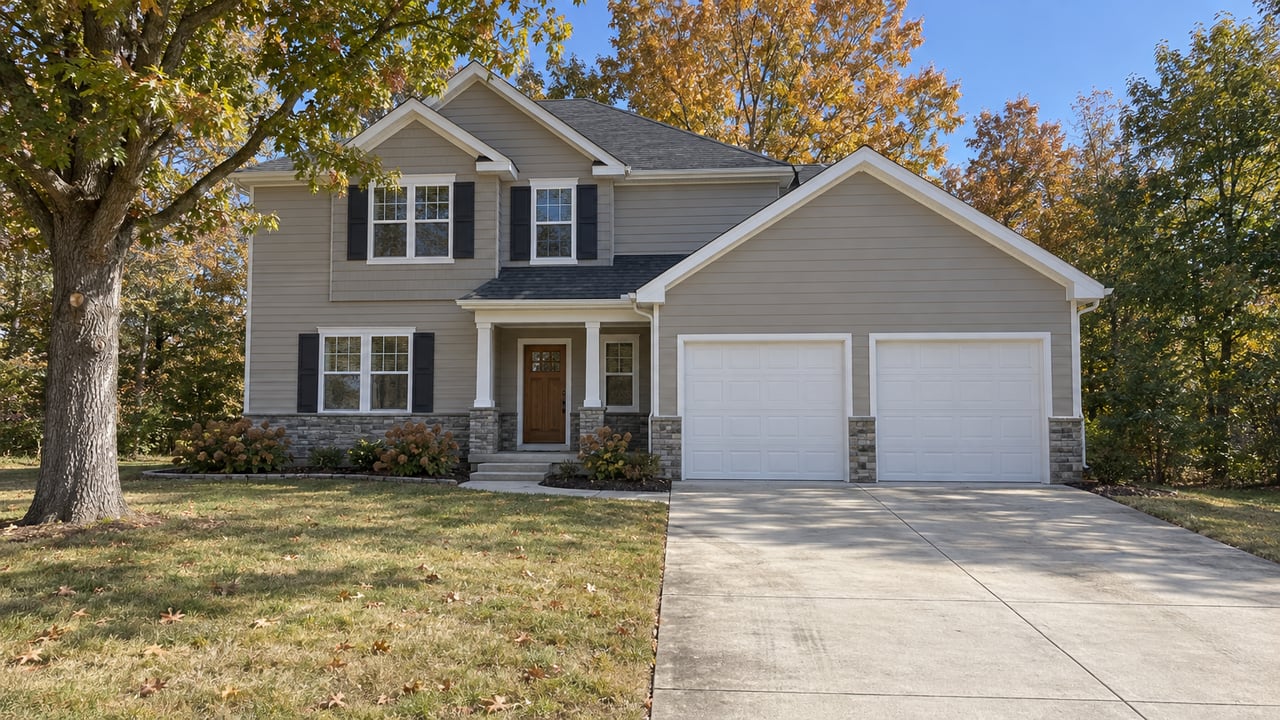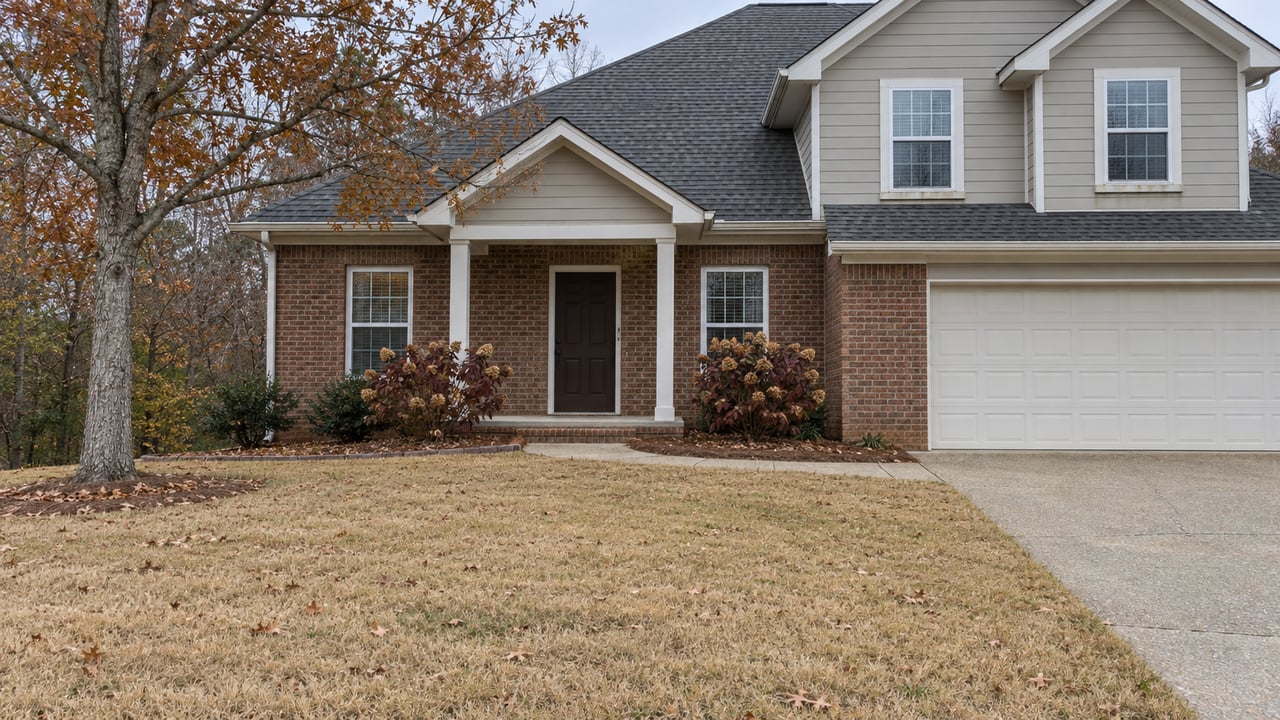
Douglas County's home market barely moved over the past year. Georgia MLS reported a median residential sale price of $320,000 for September 2026, up 1.4% from $315,502 in September 2025, with 694 active listings that month. That same year, the county reassessed about half of its properties. At a summer hearing, a county commissioner said one resident's assessed value had gone up by nearly 20%.
For a buyer, the gap between those two numbers matters more than any other tax figure. Your Douglasville tax bill depends less on what you pay for the house or what the market did this year. It depends more on where the house sits in the county's reassessment cycle and on which exemptions you, rather than the seller, qualify for.
Values catch up on a schedule, whatever the market is doing
The Douglas County Sentinel reported that Tax Assessor Greg Balfour told commissioners the state requires counties to reassess all property values within three years, and that the county reassessed 51% of its properties in 2026 alone. "It's going to show a high level of appeals, but we did what was necessary," Balfour said, according to the Sentinel.
At the same hearing, District 4 Commissioner and Vice Chairman Mark Alcarez said residents had contacted him about large jumps in their home values, including the nearly 20% increase. "Even though we're not raising the millage rate, it's going to be a lot more than $61 for some of these people," he said.
That 20% is one homeowner's case, not a county average. It still shows how the system works. A home's assessed value can sit for a while and then jump when the cycle reaches it. So a listing's tax history may reflect a value set before that jump, and the seller's last bill can be the cheapest one that house will see for some time.
The statewide cap stops at the county line
In 2024, Georgia passed HB 581, which created a statewide floating homestead exemption. In the county's words, it "limits increase in taxable home values to the prior year's inflation rate." Local governments could opt out after three public hearings. In Douglas County, every taxing body did. The Sentinel reported that the Douglas County School System opted out first, the City of Douglasville voted unanimously to follow, and county commissioners then voted unanimously to opt out as well. The school system had announced its intent to opt out in a January 15, 2025 hearing notice. Mayor Rochelle Robinson told the paper the city had no real choice, because the law requires all governments in a county to opt in or out together. Villa Rica, which sits partly in Douglas County and partly in Carroll County, voted to opt in.
A second protection is also gone. Georgia's definition of fair market value used to say the price of the most recent arm's-length sale "shall be the maximum allowable fair market value for the next taxable year." The 2024 amendment deleted that sentence, effective January 1, 2025, as the annotations to O.C.G.A. § 48-5-2 show. Your purchase price no longer sets a ceiling on next year's assessment.
The contrast with Cobb County explains why the same purchase plays out differently a few miles east. Cobb also opted out of HB 581 in February 2025, but for the opposite reason. The county said it already had a local floating homestead exemption that freezes a homeowner's taxable value when they apply, and that it gives more relief than the state version. In Cobb, a long-time owner's frozen value and a new buyer's fresh value can be far apart. Douglas County keeps local exemptions of its own. At one of the opt-out hearings, county official Tiffany Stewart-Stanley said opting out would let homeowners "retain the benefits of our current county floating homestead exemptions," and the Sentinel reported that the county offers 11 homestead exemptions to seniors, veterans and the spouses of late public safety and military personnel. The Georgia Department of Revenue lists Douglas among the counties with a valuation freeze, a type of exemption it describes as lasting for as long as the homeowner lives on the property. Each of those protections is tied to the owner who qualified for it, so a seller's frozen or reduced value does not carry over to a buyer. Douglas does have a larger base exemption than most metro counties. The county's chief appraiser told commissioners that Douglas offers a $6,000 base county exemption and that Cobb, at $10,000, is the only metro county with a better one.
Why a flat millage rate still shows up as a tax increase
Once values reset, the millage rate decides the bill, and a flat rate can still mean a higher bill. Under the state's Taxpayer Bill of Rights, each government has to calculate a rollback rate, the rate that would bring in the same revenue as the year before. If it adopts anything above that, even its existing rate, it has to advertise a tax increase and hold three hearings.
Here is where the three main 2026 rates stand.
| Taxing body | 2026 rate | What changed |
|---|---|---|
| Douglas County | 12.035 mills, set at a September 24, 2026 meeting | Reduced from 12.063 after the Georgia Department of Revenue asked the county to resubmit its rollback form |
| Douglas County Board of Education | 17.588 mills | Down 1.262 mills from 18.850 for fiscal year 2026 |
| City of Douglasville | 8.749 mills | Kept the same |
The school and city rates come from the Sentinel's reporting. It also noted that the school system has rolled back its rate in each of the past 13 years.
The county's own numbers show two very different growth rates. The official 2026 digest notice shows the net digest growing from about $7.72 billion in 2025 to about $9.10 billion in 2026, and total county maintenance and operations taxes rising 17.64%, from $93.1 million to $109.5 million. Yet county officials described the increase for property owners as 3.91%, driven mainly by new construction and rising values. They estimated about $61 more a year on a $350,000 home with a homestead exemption and about $63 without one.
Those figures are averages, and the 20% reassessment shows how far one home can land from one. Each reassessed house moves with its own new value. For the county portion, the math is simple enough to run on any listing. Georgia assesses property at 40% of fair market value, so a $350,000 home has a $140,000 assessed value, and at 12.035 mills the county tax comes to about $1,685 before exemptions. School and city millage are added on top, depending on where the home sits.
What leaves with the seller at closing
The last part of the gap has nothing to do with value. Exemptions belong to the owner, not the house. The Douglas County Tax Commissioner says a homestead exemption applies only to a home owned and occupied as the owner's legal residence on January 1, and the application must be received by April 1 of the qualifying year. When a seller moves, their exemptions stay with them, and the new owner applies on their own.
These are the exemptions that can make a seller's history look lighter than a buyer's first bill:
- Regular homestead: $2,000 off assessed value for school taxes and $6,000 off for county taxes, per the Tax Commissioner's homestead page.
- Age 62 and older: The Georgia Department of Revenue describes a state school-tax exemption of up to $10,000 of assessed value, with a $10,000 prior-year income test for the owner and spouse. Some retirement income does not count toward the limit.
- Age 65 and older: A state exemption of $4,000 from county taxes, with a similar income test.
- Disabled veterans: The greater of $32,500 or the federal amount, which DOR lists as $121,812 for 2025.
- Total disability: Douglas County lists a separate option that requires physician certification.
A house that has been in one family for decades can carry several of these at once. Its tax history then shows what that owner paid, not what the house costs to own.
Timing matters at closing too. Douglas County sends the tax bill to whoever owned the property on January 1. When a home changes hands during the year, the buyer and seller settle the taxes between themselves, usually at closing. The county's assessment notice is an estimate, and the final bill depends on the millage rates each taxing body adopts.
All of this is general information about how Douglas County's property tax works, not tax or legal advice. Confirm your own exemptions, deadlines and numbers with the Tax Commissioner's office or a tax professional.
Frequently Asked Questions
If I close on a Douglasville home in late 2026, when does my homestead exemption start? Under the county's rule, the home must be your owned and occupied legal residence on January 1. The Tax Commissioner's page lists an April 1 application deadline for the year you are claiming. The Georgia Department of Revenue says homeowners can now apply after April 1, up to the end of their 45-day window to appeal the assessment notice. Call the Tax Commissioner's office to confirm which deadline applies to you.
Does my purchase price limit my next assessment? Not anymore. The sentence in Georgia law that made the latest arm's-length sale price the maximum fair market value for the next year was removed effective January 1, 2025.
What can an owner do if they disagree with an assessment? The Georgia Department of Revenue says owners can appeal a proposed assessment to the county board of equalization, a hearing officer or arbitration.
Who answers questions about a specific property's exemptions? The Sentinel's report on the 2026 rate change points property owners to the Douglas County Tax Commissioner's Office at (770) 920-7272 for questions about exemptions and payment options.
If you're weighing a Douglasville home against options in Cobb or Paulding, Aretha Langley can go through a listing's assessment history, its current exemptions and the 2026 millage with you before you write an offer. If you're selling, that same review shows buyers what your home really costs to own. Start with a free home valuation.